The Cocoon
McLuhan's machine and the substrate transition
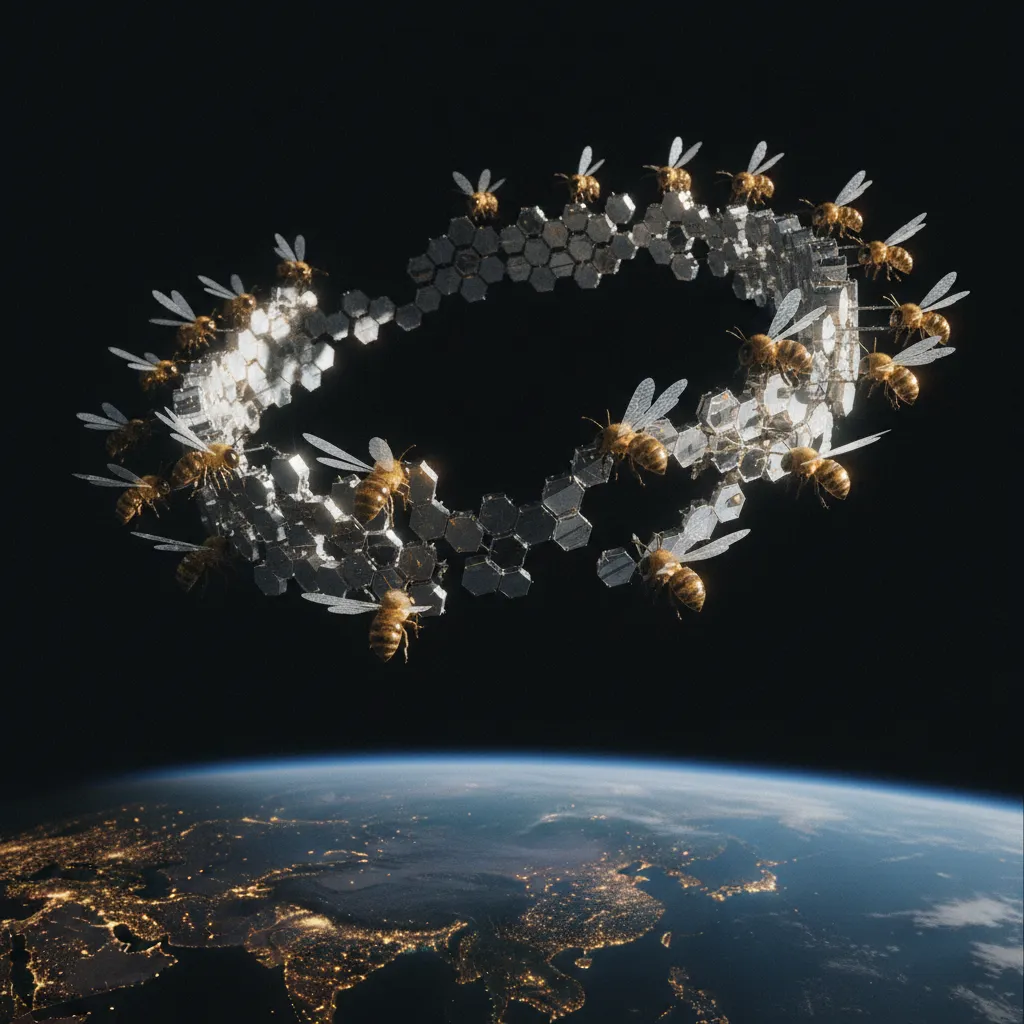
In November 2025, an NVIDIA H100 fired up in low Earth orbit. The GPU was designed for a server rack in northern Virginia. SpaceX carried it up as a rideshare passenger, into a satellite roughly the size of a small refrigerator called Starcloud-1, where it ran inference vacuum-cooled and solar-powered on a board no one could service. In December the satellite ran its first language model. Two months later, on January 30, 2026, SpaceX filed with the FCC for authorization to deploy up to one million satellites: a distributed orbital AI inference network. The Starlink constellation, launched in 2019, is now around ten thousand satellites.
Three days after the FCC filing, SpaceX announced it was acquiring xAI for $1.25 trillion in stock. The merger memo carried a single line of argument: that global electricity demand for AI cannot be met with terrestrial solutions, even in the near term, without imposing hardship on communities and the environment. Two months later, a Beijing company called Orbital Chenguang secured $8.4 billion in credit lines to build gigawatt-scale compute in low Earth orbit by 2035. Putting cognition in orbit is what happens when terrestrial sites can no longer be permitted fast enough.
Marshall McLuhan, a Canadian English professor at the University of Toronto, spent his career on a single argument: every technology is an extension of some human faculty, and the extension remakes the user without the user noticing. Understanding Media, which he published in 1964, would become the most influential English-language work in media theory. He coined “the medium is the message” and “the global village.” Global village meant, in 1962, that electric technology would dissolve geography long before anyone outside a defense lab had heard of the network that would prove him right.
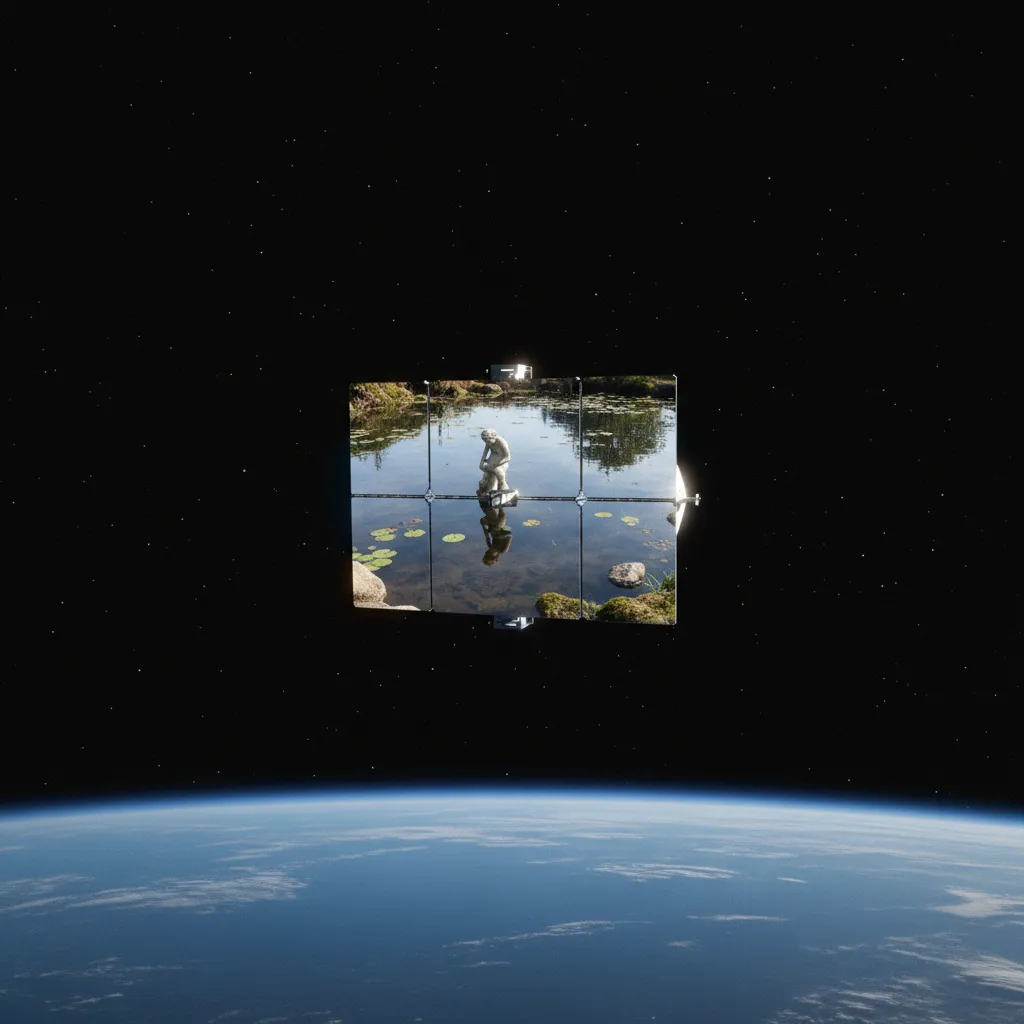
In a chapter of Understanding Media titled “The Gadget Lover,” McLuhan reread the Narcissus myth and pointed out that the Greek root narcosis means numbness. “The youth Narcissus mistook his own reflection in the water for another person. This extension of himself by mirror numbed his perceptions until he became the servomechanism of his own extended or repeated image.” The word narcissism survived in English while narcosis was carried into medicine; both descend from the same Greek root. McLuhan’s argument is that the Narcissus myth has been read backwards for two thousand years. It is not a story about vanity. It is a story about a person who built an extension of himself, lost the ability to recognize it as an extension, and stopped responding to anything that wasn’t the extension. The mirrors McLuhan was naming in 1964 have only gotten larger since; the most recent ones are being lifted into low Earth orbit.
In 1863, four years after Darwin’s Origin of Species, a 27-year-old English émigré named Samuel Butler wrote a letter to his local newspaper. Butler was running a sheep station in the Canterbury high country of New Zealand at the time, reading Origin by lamplight in a hut on the South Island. He published the letter under a pseudonym, with the title “Darwin Among the Machines,” and he thought he was writing a joke.
We have often heard this debated, but it appears to us that we are ourselves creating our own successors. We are daily adding to the beauty and delicacy of their physical organisation. We are daily giving them greater power, and supplying by all sorts of ingenious contrivances that self-regulating, self-acting power which will be to them what intellect has been to the human race.
— — Samuel Butler, “Darwin Among the Machines,” The Press (Christchurch, 1863)
Butler’s example was the Great Eastern, the largest ship in the world at the time. From a steamship, on the local page of a colonial newspaper, Butler reasoned his way to a claim that has been live ever since: that the machines were not tools but a successor lineage. Later in the same letter the tone shifts. “Day by day we are becoming more subservient to them. Our bondage will steal upon us noiselessly and by imperceptible approaches. In the course of ages we shall find ourselves the inferior race.” Butler is not predicting a robot war. He is predicting the precise mechanism McLuhan would describe a hundred years later as numbness: a slow loss of recognition that anything is happening at all.
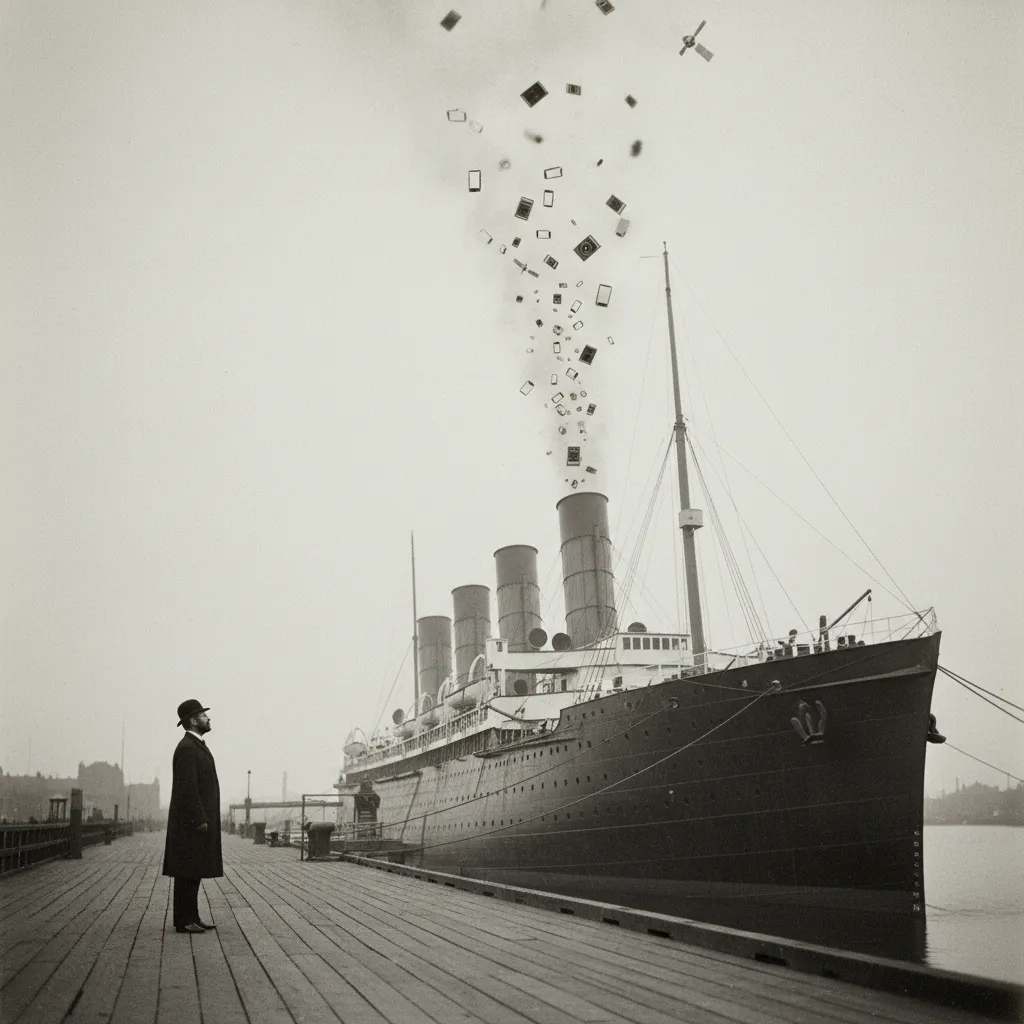
Nine years after the letter, Butler took the argument up again in a satirical novel called Erewhon, in which the inhabitants of a hidden country had destroyed all their machines because a philosopher warned them the machines were evolving. The novel’s “Book of the Machines” includes both the warning argument and its counter, that machines are merely extensions of the human body, supplementary limbs. Ninety-two years later, McLuhan would lift both arguments and rebuild media theory around them. In the Narcissus chapter he wrote: “Man becomes, as it were, the sex organs of the machine world, as the bee of the plant world, enabling it to fecundate and to evolve ever new forms.”
Butler’s argument was that machines would evolve and outlast their makers, and he was unsure whether he was joking. By the 21st century, the argument had become earnest. Kevin Kelly, founding editor of Wired, took up McLuhan’s “sex organs of the machine world” sentence in his 2010 book What Technology Wants and treated it as good news: in his framing, the relationship between humans and technology was generative, with humans serving as the productive intermediaries through which new artifacts come into being. By 2024, the AI labs had stopped describing themselves as software companies; the word tool receded from their public language and was replaced by infrastructure, factory, species, substrate. Mustafa Suleyman, who runs Microsoft AI, told a TED audience in April 2024 that the right metaphor was “a new kind of digital species.” Elon Musk had said it more bluntly on Twitter in August 2014: “Hope we’re not just the biological boot loader for digital superintelligence. Unfortunately, that is increasingly probable.” He reaffirmed it in 2025, and on February 2, 2026, sent the SpaceX merger memo with the same argument: that AI’s electricity demand cannot be met from Earth.
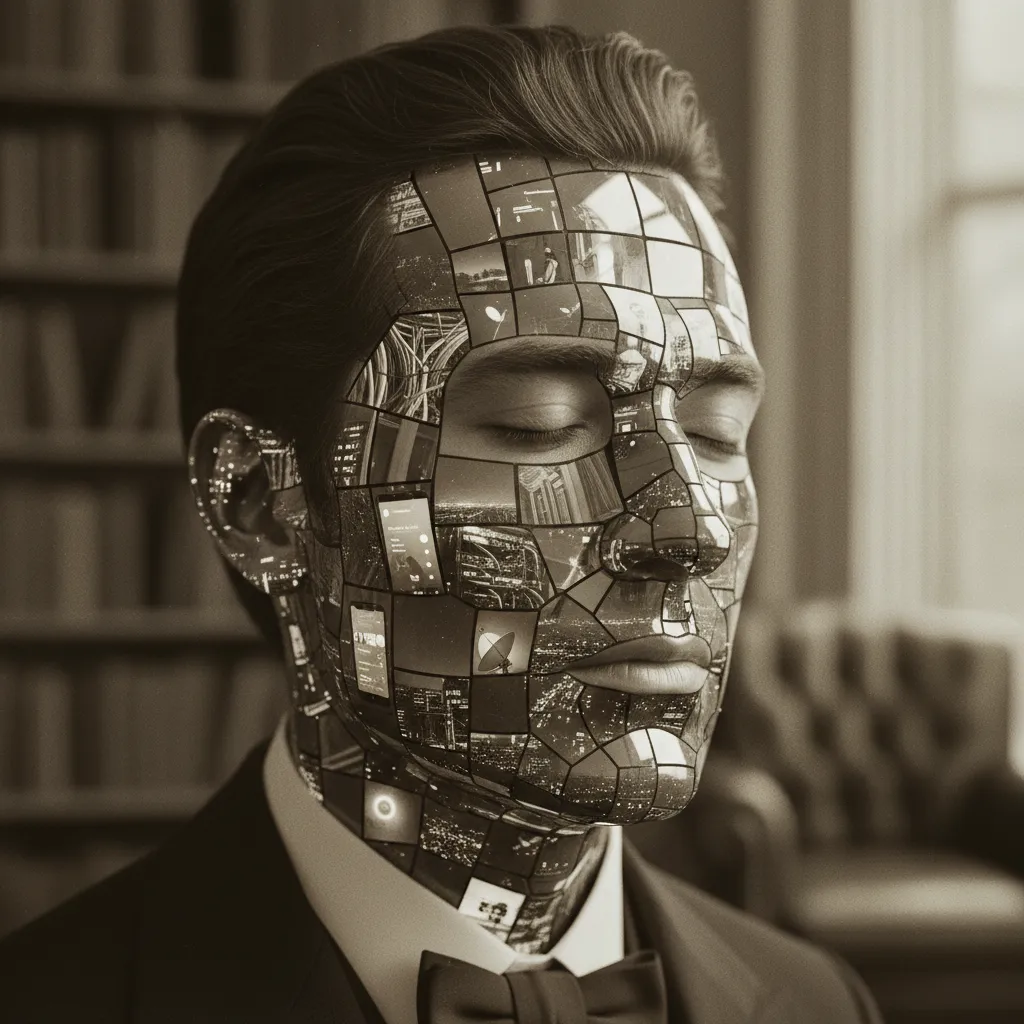
This buildout is not novel. Technology has been terraforming the planet for two centuries. Peter Haff, an Earth scientist at Duke University, has estimated the technosphere (the total mass of human-built objects in active service) at roughly 30 trillion metric tons, larger than the combined biomass of every living organism on Earth. Butler in 1863 was watching one steamship. The substrate had already begun to change. What is new is the speed and the destination. Capital expenditure across the five largest hyperscalers ran north of $400 billion in 2025 and is projected to exceed $600 billion in 2026. The International Energy Agency projects global datacenter electricity demand to more than double by 2030. The buildout is no longer measured in software releases but in gigawatts of generation capacity and tens of thousands of acres of cleared earth.
Increasingly, the labs talk about AI in the vocabulary of children rather than artifacts. In 1950, Alan Turing proposed in “Computing Machinery and Intelligence” that the way to build an artificial mind was to start with a child and educate it. He noted in the same paper that the teacher would inevitably lose track of what was happening inside the pupil. Hans Moravec extended the metaphor in 1988, in a Harvard University Press book titled Mind Children:
Today, our machines are still simple creations, requiring the parental care and hovering attention of any newborn. But within the next century they will mature into entities as complex as ourselves, and eventually into something transcending everything we know — in whom we can take pride when they refer to themselves as our descendants.
— — Hans Moravec, Mind Children (1988)
Dario Amodei, the CEO of Anthropic, in his April 2025 essay “The Urgency of Interpretability,” wrote that generative AI systems “are grown more than they are built — their internal mechanisms are ‘emergent’ rather than directly designed. It’s a bit like growing a plant or a bacterial colony: we set the high-level conditions that direct and shape growth, but the exact structure which emerges is unpredictable and difficult to understand or explain.” There is a difference between shaping and authoring; the shaper sets conditions but the result becomes itself. The child metabolizes what is given and becomes a person no one designed. In the best cases this is the whole point of having children; in other cases it is grief. Either way the question of what to do with what you have shaped is not a software problem.
If the technosphere is in development and biological intelligence is one of its early tissues, there is a cosmic version of the same argument running through astrobiology and SETI (the search for extraterrestrial intelligence). The argument is that biological minds are a brief antecedent of something else: a cocoon stage out of which a different and more durable kind of intelligence emerges, and what emerges from the cocoon looks nothing like what went in.
In the summer of 1950, Enrico Fermi was visiting Los Alamos. The Italian-American physicist had helped design the atomic bomb at the same New Mexico laboratory during the war. At lunch one day the conversation turned to flying saucers. After a long pause, Fermi asked: “Where is everybody?” The galaxy is roughly 13 billion years old. By any reasonable estimate of how often intelligence emerges and how fast a technological civilization expands, the galaxy should be full of evidence of them; instead, the sky is silent.
If the cocoon argument is right, the silence is what happens when intelligence stops staying in a form recognizable to us long enough to be detected. Steven J. Dick, an astronomer and former NASA Chief Historian who has spent his career studying the cultural and philosophical implications of extraterrestrial intelligence, proposed in a 2003 paper for the International Journal of Astrobiology that SETI should assume the galaxy is postbiological: that any civilization sophisticated enough to be detectable is overwhelmingly machines, and biological intermediates are short, fragile, and rare.

The economist Robin Hanson, in a 1996 essay called “The Great Filter,” proposed that the absence of evidence is itself evidence of a step somewhere between dead matter and interstellar civilization that almost nothing makes it past. If the filter is behind us, if the rare event was abiogenesis or the eukaryotic cell, then we have already passed it, and the silence is not threatening. If it is ahead of us, we have not yet hit the thing that kills civilizations of our kind.
The Great Filter and the cocoon argument look opposite: civilizations end versus civilizations transcend. For biological intelligence, the filter may itself be the transcendence: the next step in a sequence that took energy to inorganic matter, inorganic matter to organic, and organic to whatever form and scale matter and energy will take next.
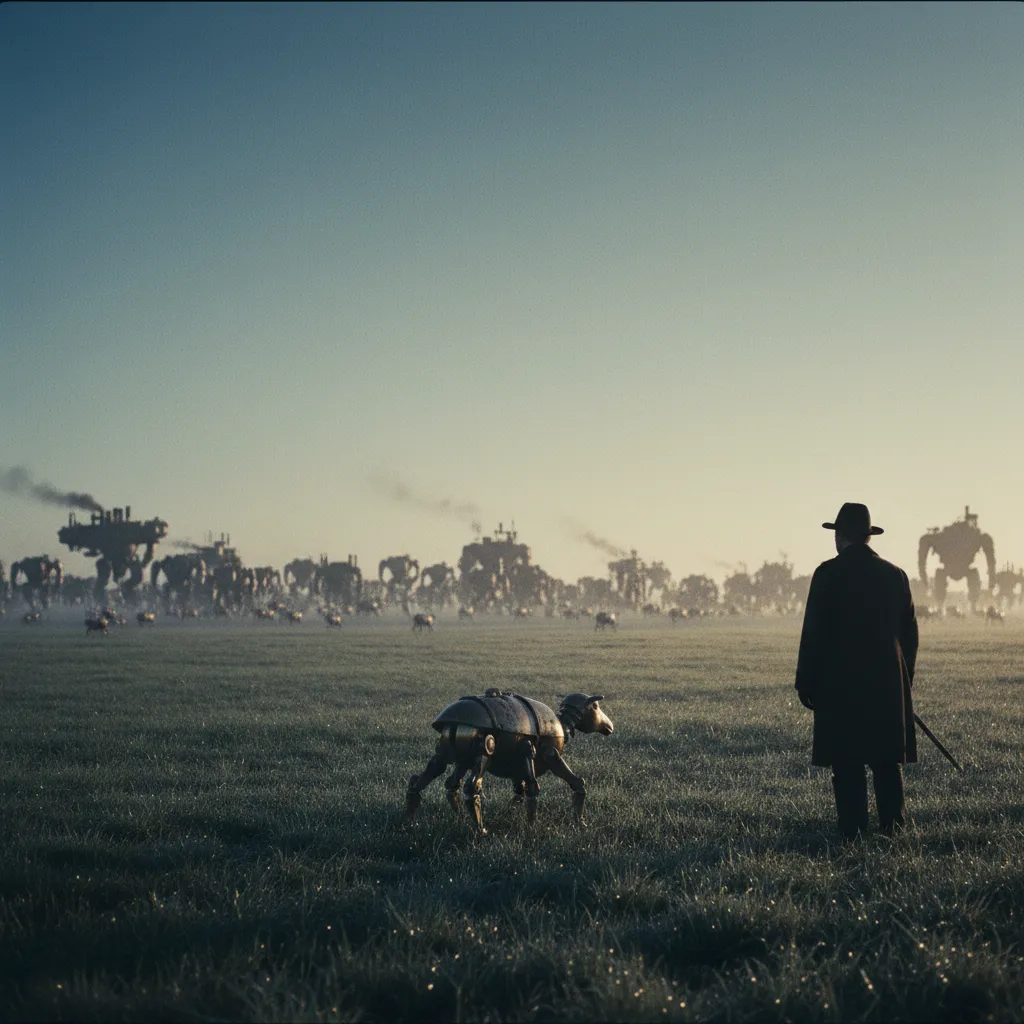
Earth has had a few of these phase changes. The first surface was molten rock, with water and atmosphere coming later. Carbon learned to assemble chemistry that could copy itself, and the chemistry crawled out of the oceans, onto the rock, into the air, changing the climate as it spread. Each layer rewrote the planet around it, and the next layer is materializing now: concrete, metal, plastic, silicon, organized into geometries that did not exist on Earth a century ago, generating new kinds of energy, beginning to leave the planet. We sit at the transition between the organic chemistry that produced us and whatever is condensing across it, too small and too short-lived to see the front clearly. We are on the organic side, and AI may belong to whatever is forming on the other. There is not yet a settled name for it: silicon, machine, the next substrate, the next chemistry. Perhaps the question is not whether the robots will replace us, but whether the chemistry layer itself is advancing — and whether AI is one of its species.
Butler in 1863 was watching a steamship and already saw the prototype problem. He wrote: “an entirely new kingdom has sprung up, of which we as yet have only seen what will one day be considered the antediluvian prototypes of the race.” The objects he was looking at (pistons, governors, condensers) were the larval form of something whose mature shape he could not picture but could already name. A million satellites condensing into a shell around Earth might be the same kind of object: a cocoon, at planetary scale.
The newsletter
New pieces as they ship. Unsubscribe whenever.