Means of Representation
Debord and the AI apparatus
In societies dominated by modern conditions of production, life is presented as an immense accumulation of spectacles. Everything that was directly lived has receded into a representation.
— — Guy Debord, The Society of the Spectacle, Thesis 1
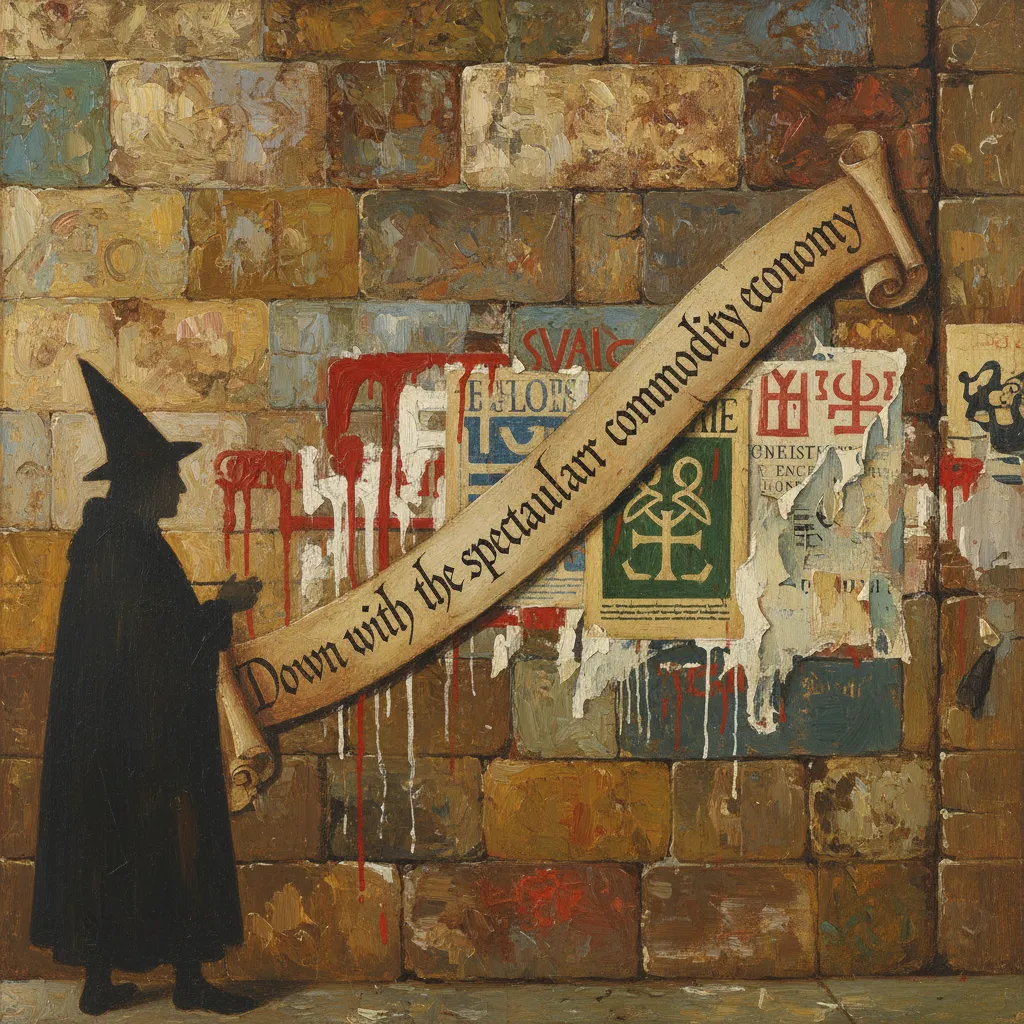
Guy Debord wrote those sentences in the autumn of 1967. They appeared in print on November 14, in a book called The Society of the Spectacle, from a small Paris house called Buchet-Chastel. Six weeks earlier, color television had launched on French state TV. Debord was thirty-five and a co-founder of the Situationist International, a small radical group in Paris that argued the modern world had been hollowed out by mass-mediated images. Six months later, ten million French workers would walk out in the largest general strike postwar Europe had seen, and slogans drawn from this book would appear on the walls of the Sorbonne. Down with the spectacular commodity economy. Never work. Power to the workers’ councils. But the strike ended, the state held, and the book sold modestly through the seventies before being retranslated into English in 1994.
Sixty years on, looking at the apparatus we now live inside of, it is uncomfortable how accurately Debord’s argument describes the condition we are in. He was writing about what was already happening to him: the sense that life was being lived through images, that fewer and fewer people were producing the images everyone else lived through, and that this asymmetry was no longer a layer on top of life but had become the substance of it. Most readers see the title The Society of the Spectacle and assume it refers to mass entertainment and propaganda, to Hollywood and advertising and the news and the ubiquitous screen, but Debord meant something more specific.
For Debord, the spectacle is not a collection of images but a social relation, mediated by images — the basic shape of how human beings encounter each other under modern conditions of production: through advertising, through cinema, through television, through whatever apparatus is mediating the encounter in any given decade. The mediation does work that goes beyond representation. It reorganizes what people are to themselves.
Debord’s claim was that under modern conditions, the things that should be most personal start coming back to you in mass-produced form: what you want, how you move, who you think you are. You see yourself in advertisements before you see yourself in your own life. You begin wanting what the images tell you to want, and moving the way the images suggest you should move. This is alienation in a new form: not separation from the means of production, which Marx had written about a hundred years earlier, but separation from the means of representation. You cannot make the pictures of life you live by; you can only consume the ones somebody else made for you. The spectacle, in his account, is not what is on the screen. It is the way the screen has rearranged how people encounter themselves and each other.
The medium of the mediation has changed many times since. Cable, the web, social media, the smartphone. With each technological deepening, Debord’s analysis has fit more precisely. He was not describing a particular apparatus but a structural condition, and the condition outlasted every apparatus that produced it. The current form of the apparatus is artificial intelligence.
This is why the spectator feels at home nowhere, because the spectacle is everywhere.
— — Debord, Thesis 30
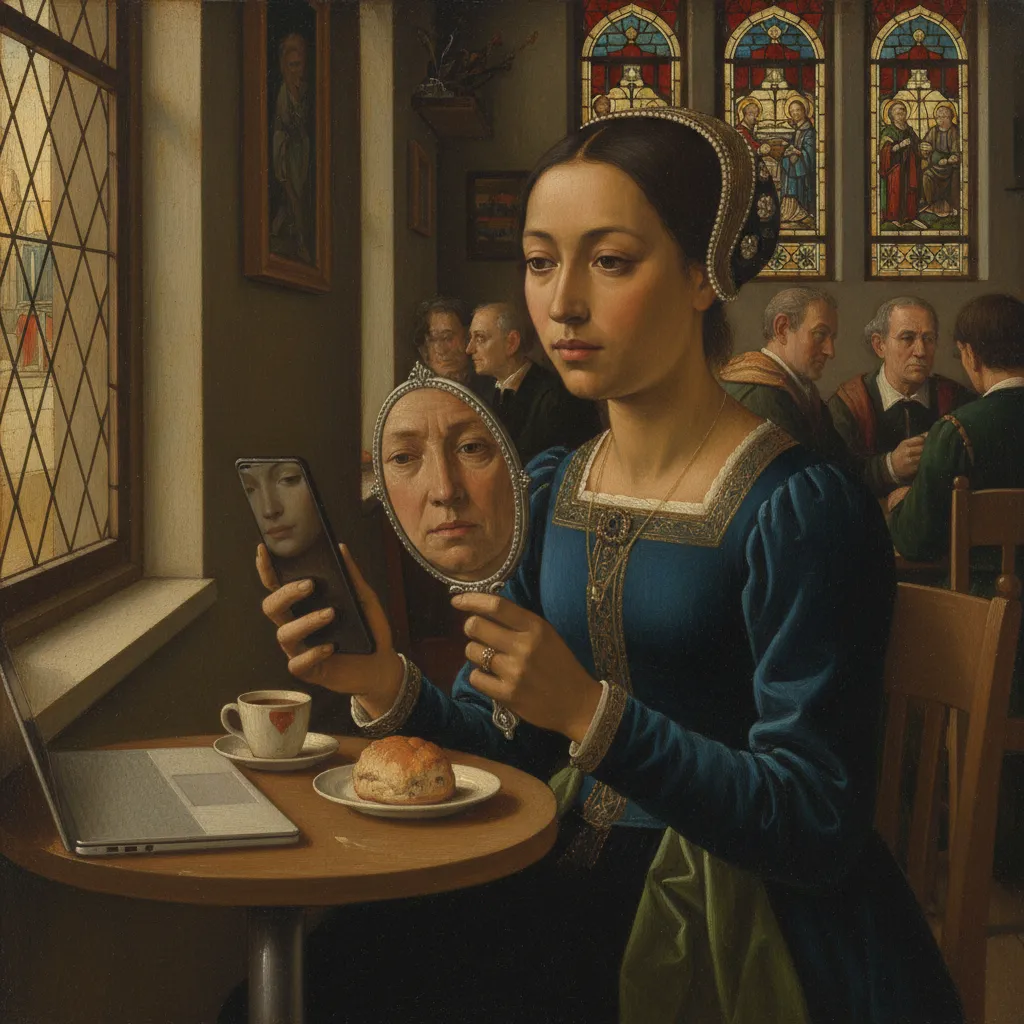
Search Google for any news event today and the first thing you see is not a link to a story but an AI Overview, a paragraph of summary written by a model. The links to publishers are below it. A Pew study of seventy thousand real searches found that only one percent of users click any of those links from inside the Overview itself. The Overview is the answer; the article is no longer needed. The news, which was already an editor’s selection of what mattered, has now been further synthesized by a model. What you read is mediation on top of mediation.
The same pattern is across the surface of every product. Music apps choose what plays next and tell you what you are about to feel about it. Photo apps reshape the picture you took before you see it. News apps lead with an AI summary of the story. Dating apps suggest the opening line you will use. Each of these has had some form of automation for a decade. What has changed is that the automation now writes: it generates the words, the images, the answers, and what it generates becomes the thing the user actually receives. The user no longer sees a curated selection of human-made content. The user sees a model’s synthesis of everything the model has been trained on.
The earlier apparatus could be turned off; the screen still had edges. AI does not. It runs autonomously inside the search bar, inside the music app, inside the news feed, inside the dating app. It does not need you to visit it. It waits where you already live. The spectacle is now ambient — no off switch. What Debord described as a condition, AI completes.
Where the real world changes into simple images, the simple images become real beings and effective motivations of hypnotic behavior.
— — Debord, Thesis 18
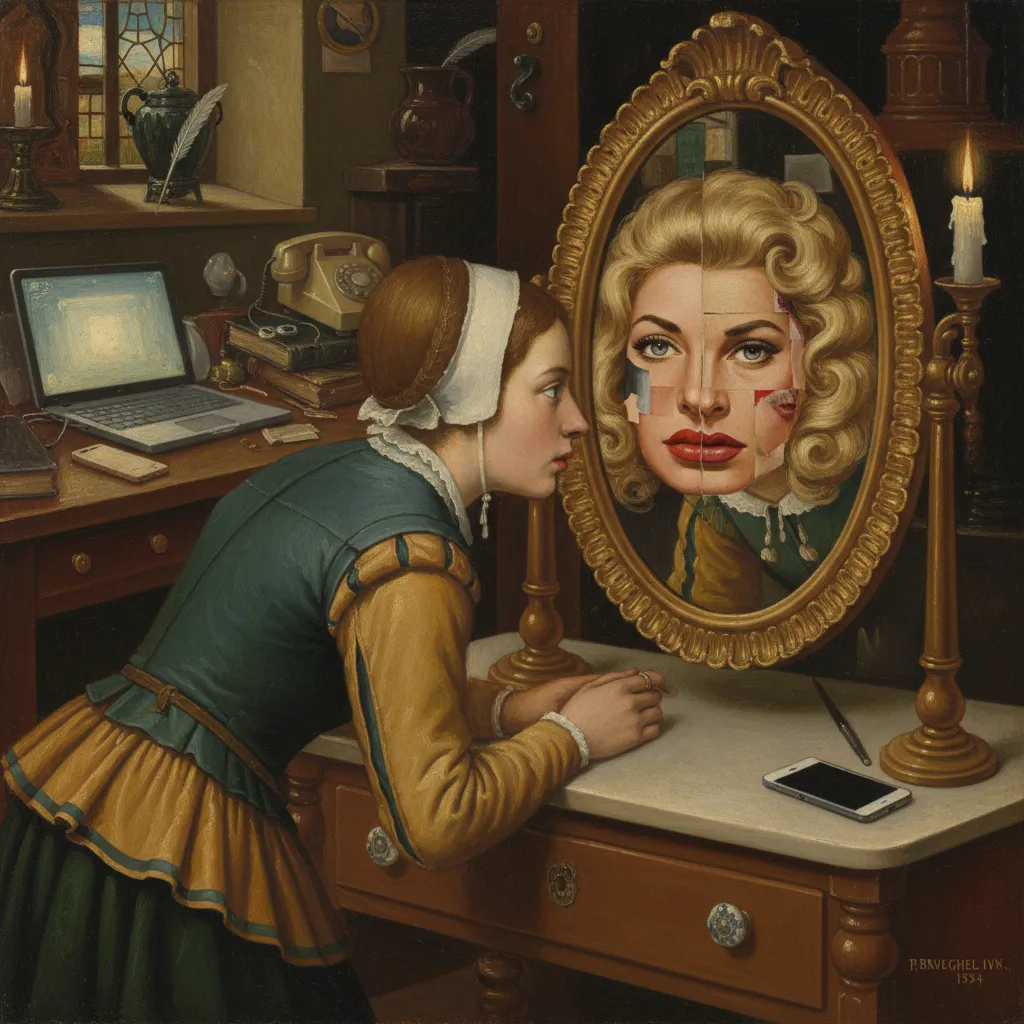
When that line was written, it described a passive consumer of mass media: the public’s experience of reality being replaced by representations of it on screens, headlines, and magazine pages. The “mere images” were becoming real to the public, but the public was not making them. The user in 2026 is not passive. The user prompts, edits, shares, refines, regenerates, posts. The system runs on this activity, and the inversion is complete: the user makes the mere images. They become real beings, in the form of content other people consume, training data the next model absorbs, and behavioral signals the platform exploits.
Suno, an AI music platform, generates roughly seven million songs per day from user prompts. The three major record labels combined release approximately thirty-nine hundred. Every two weeks, Suno users generate roughly as many new tracks as Spotify’s entire streaming catalog contains. Each song is produced by a user typing a prompt and accepting what comes back: the user is the labor, the model is the foreman, and the output belongs to the platform, which sells subscriptions to the users who produced the output.
The pattern repeats wherever you look. Hinge launched AI Convo Starters in December 2025: the app suggests three personalized opening lines per match, and the user picks one. NewsGuard counts more than three thousand AI-generated content-farm news sites as of March 2026, each producing articles for an audience that will mostly never know it is reading them. The spectacle no longer needs to manufacture all its images upstream. We manufacture them at the edge, and pay subscription fees to keep doing it.
There is also a shift at the level of the public itself. The spectacle Debord wrote about was uniform: the same broadcast, the same headline, the same advertising, with the public watching together. The mediation now is personalized. Each user receives a feed, a search result, a summary, a recommendation generated for that user. What was once a shared spectacle is now a personalized one for every viewer of it.
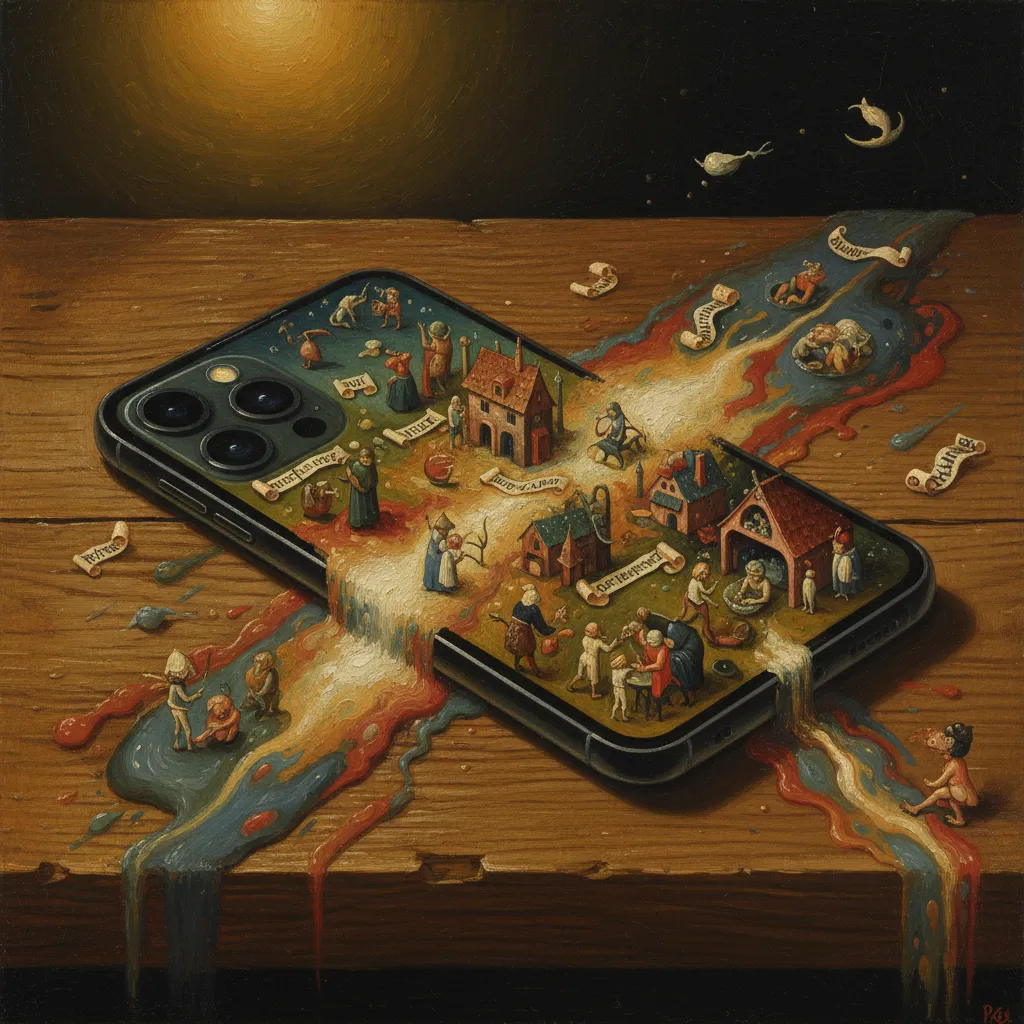
This is the structural condition behind what gets called polarization. In 1994, 17 percent of Americans held “very unfavorable” views of the opposing political party, according to Pew Research. By 2022 the figure was 62 percent of Republicans and 54 percent of Democrats, having more than tripled in under thirty years. In January 2024, two days before the New Hampshire Democratic primary, voters received robocalls from a voice cloned from Joe Biden, telling them not to vote in the primary. The operative who commissioned the calls was indicted on thirteen felony counts of voter suppression, and the FCC issued a six-million-dollar fine. It was widely described as the first documented use of an AI deepfake in domestic US electoral politics.
The relation Debord wrote about, the social relation among people mediated by images, fractures when the images are no longer shared. The hypnotic behavior Debord named was uniform: the same headlines, the same advertising, the same images shown to everyone at once. Its current form is bespoke — each user prompts what comes next, each prompt shaped by what came back from the last one, each user separated from every other into a public that no longer recognizes itself as one.
The spectacle is the moment when the commodity has attained the total occupation of social life. Not only is the relation to the commodity visible but it is all one sees: the world one sees is its world.
— — Debord, Thesis 42
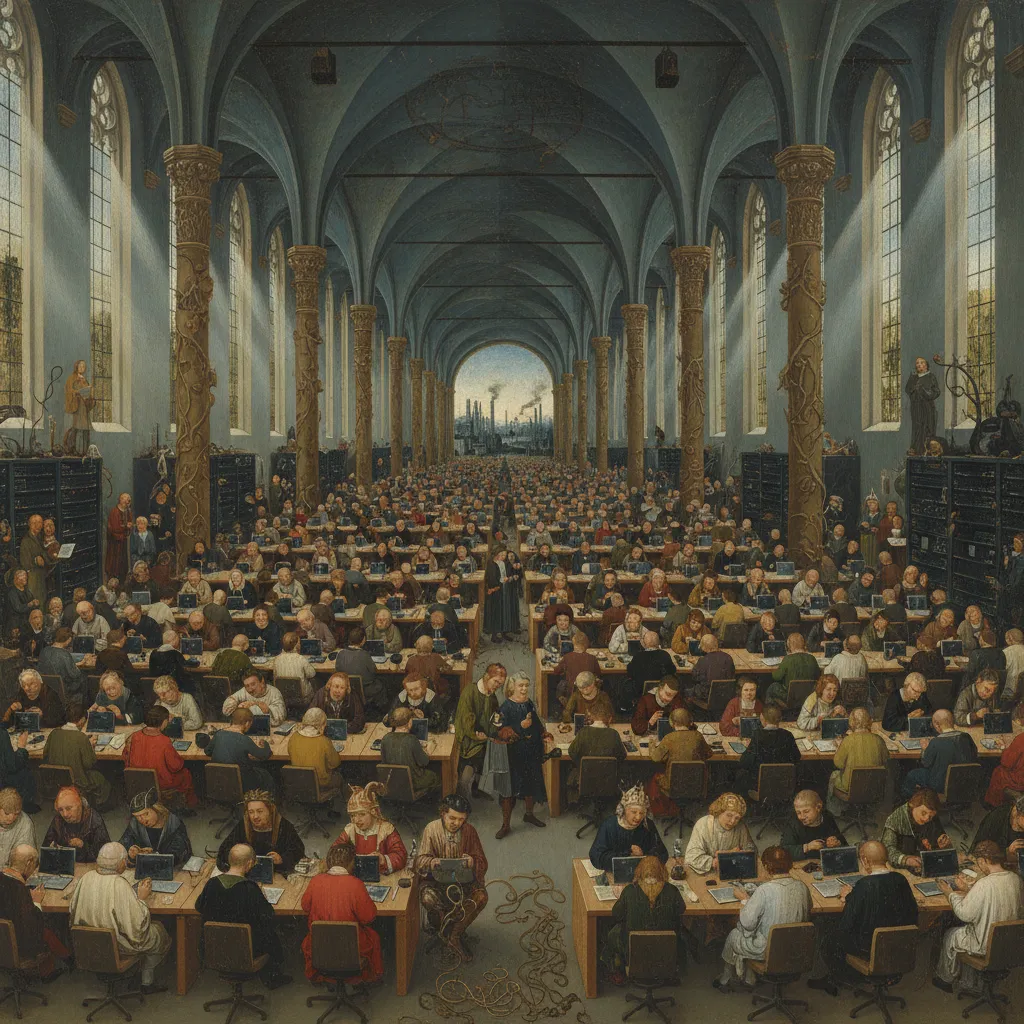
A user opens Outlook in the morning. The model has already drafted three replies. She reads them, edits one, deletes another, sends the third. Into a Slack thread she types “sounds good,” and the model suggests three warmer alternatives. One gets picked. By lunch more sentences have been approved than composed. The voice going out under her name is more often the model’s than her own.
When that thesis was written, the commodity meant the goods one bought after work: the radio in the kitchen, the car in the driveway, the appliances in the home, the magazine on the table. The commodity was around the worker but had not yet entered the substance of working life. AI has now crossed that threshold. The model drafts the email, suggests the reply, summarizes the meeting, rewrites the dating profile, manages the calendar, writes the performance review, chooses the music. The commodity is no longer around the worker; it is what the worker uses to think and to speak.
Microsoft 365 Copilot, the AI integrated into Outlook and Word and Excel and Teams, passed twenty million paid enterprise seats in April 2026, at thirty dollars per user per month. On the company’s earnings call, Satya Nadella said weekly engagement among those users had reached parity with Outlook itself, the email client they open every day.
Debord saw a society where people were separated from their own activity, their own desires, their own gestures. The current AI moment sells exactly those separations as features. What Debord called alienation, the platform calls productivity. The spectacle’s victory is that we choose it.
The specialization of images of the world is completed in the world of the autonomous image, where the liar has lied to himself.
— — Debord, Thesis 2
Debord did not just diagnose the condition. He prescribed a way out of it. The Situationist program was specific: direct democratic organization at the workplace level, the proletariat seizing not only the means of production but the means of representation, a refusal of the spectacle’s terms, the construction of situations outside its grip. The Society of the Spectacle spends its later chapters arguing that workers’ councils, organized from below, were the only structure that could outpace the spectacle’s absorption.
In May 1968 the strike was the test. For about three weeks France looked like it might break. Ten million workers occupied factories. The Situationists were on the walls of the Sorbonne. Then the strike ended. De Gaulle returned. Workers went back to their factories. The Situationist International dissolved in 1972. Debord moved to a remote village in southern France, drank heavily, and in 1984, after his publisher Gérard Lebovici was assassinated in a Paris parking garage, pulled all his films from circulation in protest at how the press covered the killing. He wrote a more pessimistic sequel in 1988, describing an “integrated spectacle” that had merged the totalitarian and the consumer forms, and in 1994 he took his own life.
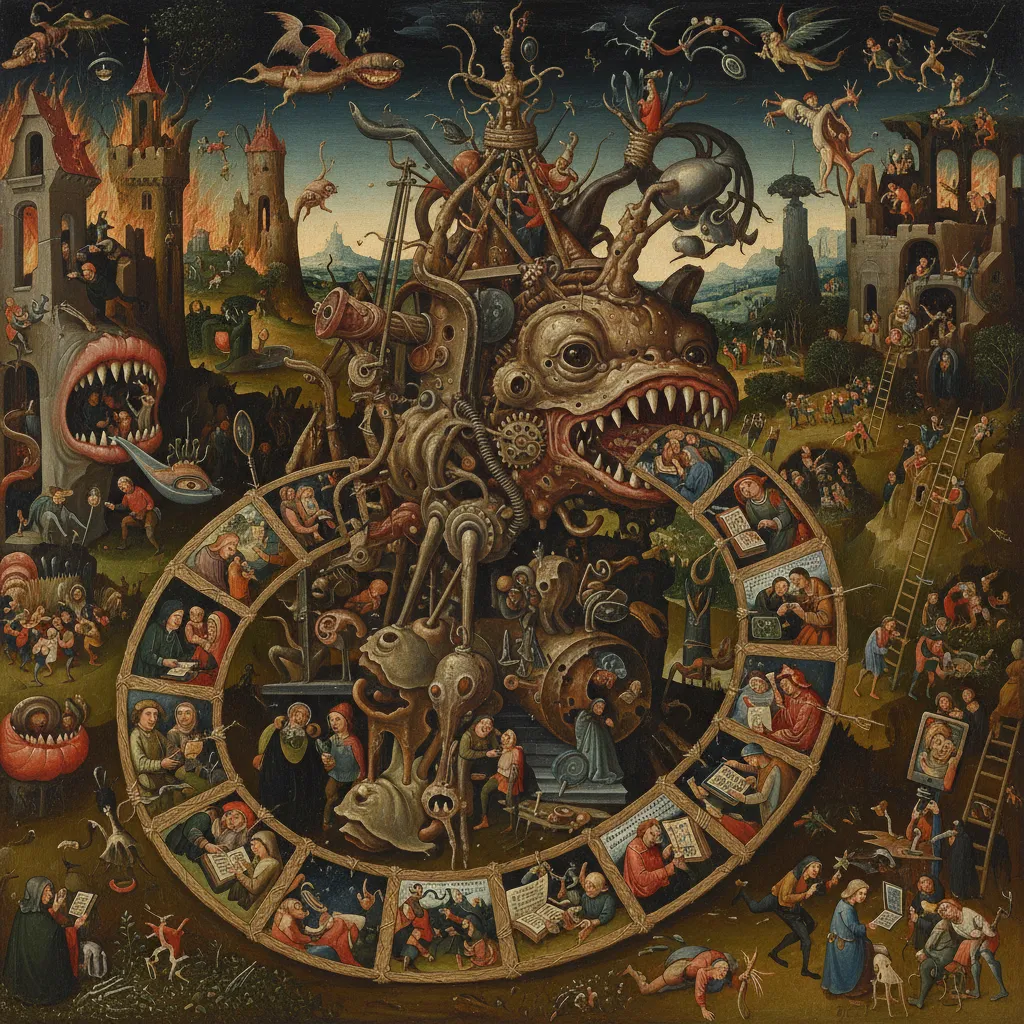
The diagnosis outlasted the prescription. The workers’ councils never materialized, and no one has written a Debord-shaped book on the other side of AI. The apparatus, meanwhile, has gone further than Debord saw. Models train on what models produced. Agents prompt other agents inside the systems people pay to use. And the loop closes back on the user: we feed the apparatus what we have written, it returns a synthesis of what users put in, and we keep treating the return as if it came from outside us.
The prompt you type into the model is yours. What comes back is shaped by what you wrote, produced for you alone. For the first time in the spectacle’s history, ordinary people have something like access to the means of representation, in detail, on demand.
The model will keep drafting the email. The Overview will keep getting there before the article. The platform will keep owning what was produced. None of this is going to change. What can change is whether you know it is happening while it happens. Sixty years later, Debord’s diagnosis still holds, and that awareness is the part the apparatus cannot take.
The newsletter
New pieces as they ship. Unsubscribe whenever.